Christmas Ornament 3D Paper Craft Roses: Integrating Printable Assets into Creative Workflows
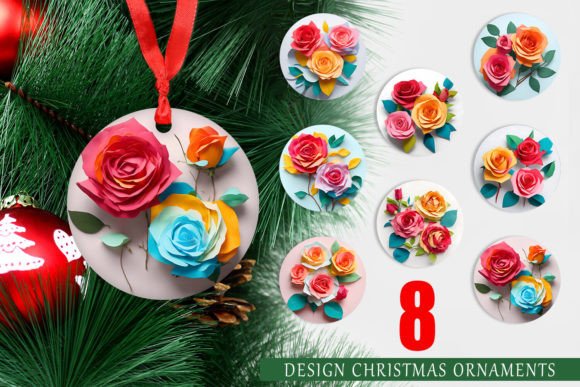
Integrating high-quality digital assets into physical crafting projects requires a bridge between screen resolution and tangible output. The Christmas Ornament 3D Paper Craft Roses collection serves as this critical link for creators, educators, and small business owners who need reliable, scalable design elements. This set of eight circular decorative designs is not merely a collection of festive images; it is a production-ready resource engineered for specific dimensional outcomes. When utilizing these printable PNG files, the focus shifts from searching for inspiration to executing a precise manufacturing or creative process. Understanding the technical specifications and workflow applications of these 5x5 inch, 1500x1500 pixel assets ensures that the transition from digital file to 3D paper rose ornament is seamless, efficient, and professionally finished.
Technical Specifications and Print Workflow Integration
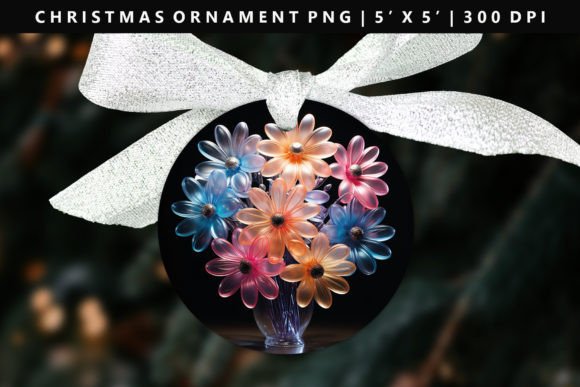
The foundation of any successful paper craft project lies in asset fidelity. These Christmas Ornament 3D Paper Craft Roses are provided at 300 DPI, which is the industry standard for crisp, professional-grade printing. For professionals managing print workflows, this resolution eliminates the guesswork often associated with web-sourced graphics. At 1500x1500 pixels, each file maps perfectly to a 5x5 inch print area without interpolation or quality loss. This exact sizing is crucial when integrating with cutting machines like Cricut or Silhouette, or when setting up gang sheets for commercial printing.
In a pre-production phase, verify your printer settings before committing to bulk runs. Because these are high-resolution PNGs with transparent backgrounds, they interact predictably with design software such as Adobe Illustrator, Canva, or Affinity Designer. You can place them directly onto artboards without needing to mask out white boxes or adjust color profiles extensively. For those producing ornaments for sale or client gifts, this consistency reduces material waste. The 5x5 inch dimension also aligns with standard paper trimming guides, allowing you to maximize sheet usage on A4 or Letter-sized cardstock. Efficient nesting of these circular designs can reduce paper costs by up to 20% compared to irregularly shaped assets.
Pre-Project Planning and Material Selection
Before initiating the assembly of 3D paper roses, the digital asset dictates material requirements. The visual density and color saturation of these Christmas ornament PNGs perform best on specific substrates. While standard copy paper is accessible, it lacks the structural integrity required for 3D forming. For optimal results, integrate these designs with 65lb to 80lb cardstock. This weight range holds the curl of a paper petal while remaining pliable enough for shaping tools. Heavier weights may obscure the intricate details of the rose design, while lighter weights may cause the ornament to sag under its own weight once assembled.
Planning also involves color management. Although these files are high-resolution RGB PNGs, printing on different media can shift color output. Professionals should run a test strip on their chosen cardstock to calibrate printer ICC profiles. This step is particularly important if the ornaments are part of a larger branded holiday campaign where color consistency matters. By treating the Christmas Ornament 3D Paper Craft Roses as a calibrated component rather than a standalone image, you ensure the final physical product matches the digital proof. This foresight prevents reprints and ensures that the vibrant reds, greens, and golds typical of holiday aesthetics translate accurately from screen to paper.
Execution Strategies for 3D Assembly
The transformation from a flat 5x5 inch circle to a volumetric rose ornament is a process of controlled deformation. During the execution phase, these designs serve as both the aesthetic surface and the structural guide. The circular format is intentional; it provides uniform margins for rolling or pleating techniques commonly used in paper floristry. For makers teaching workshops or creating content, this uniformity simplifies instruction. Students or viewers can focus on the tactile skill of shaping rather than struggling with inconsistent cutting lines.
When assembling, consider the adhesive workflow. High-resolution prints can sometimes have a slight sheen depending on the ink and paper combination, which affects glue adhesion. Using a tacky glue or hot glue specifically designed for porous surfaces ensures longevity. For entrepreneurs selling these as finished goods, durability testing is essential. Assemble a prototype using the exact materials intended for production and subject it to handling tests. Does the print crack when folded? Does the color transfer when touched? These observations inform whether a protective spray sealant is necessary post-print. Integrating this quality control step into your workflow protects your reputation and ensures customer satisfaction.
Applications Across Professional and Educational Contexts
The versatility of this set of 8 circular decorative designs extends beyond personal hobbyist use. In educational settings, these assets provide a structured framework for teaching geometry, spatial reasoning, and fine motor skills. Educators can use the consistent 5x5 inch size to create standardized lesson plans where variables are controlled, allowing students to focus on technique. The high-resolution nature of the files means they remain clear even when projected on smartboards for demonstration purposes before students begin their individual work.
For small business owners and marketers, these Christmas Ornament 3D Paper Craft Roses function as value-added content or product differentiation. Boutique owners might use them as premium packaging embellishments, elevating the unboxing experience. Content creators and bloggers can utilize the set to produce cohesive holiday visuals without licensing concerns associated with stock photography. Because you possess the source files, you can modify opacity, add text overlays, or combine multiple roses into composite arrangements for social media headers or email newsletters. This adaptability makes the asset a multi-purpose tool in a broader marketing ecosystem.
Digital Asset Management and Long-Term Utility
Efficiency in creative work relies heavily on organization. With eight distinct PNG files, establishing a logical naming convention and storage structure is vital for long-term usability. Rather than leaving files in a generic "Downloads" folder, integrate them into a centralized asset library tagged with metadata such as "Holiday," "3D Craft," "Rose," and "Printable." This reduces retrieval time during future projects. For teams collaborating on holiday campaigns, storing these assets in a shared cloud drive with clear usage guidelines prevents version conflicts and ensures everyone accesses the correct 300 DPI master files.
Consider the lifecycle of these designs beyond the current season. High-quality floral ornaments are not strictly limited to Christmas; with simple color adjustments in post-processing, they can transition into Valentine’s Day, Mother’s Day, or wedding decor assets. Maintaining the original high-resolution PNGs allows for non-destructive editing years down the line. This forward-thinking approach to asset management maximizes return on investment. Instead of purchasing new resources for every event, you leverage existing, proven assets that already fit your established production workflows.
Quality Control and Output Consistency
Achieving professional results requires monitoring output at every stage. When printing the Christmas Ornament 3D Paper Craft Roses, inspect the first few sheets for banding, color shifts, or alignment issues. Even with 300 DPI source files, printer nozzle clogs or low ink levels can degrade quality. Implementing a checkpoint system where printed sheets are approved before cutting or assembly saves time and materials. For those outsourcing printing, providing the printer with the specific 1500x1500 px dimensions and requesting a hard proof ensures the vendor meets your standards.
Consistency across the set of 8 designs is another factor in perceived quality. Ensure that all ornaments in a batch are printed under identical conditions. Variations in humidity or paper lot numbers can affect how the paper curls and how the ink sits. Store printed but unassembled ornaments in a climate-controlled environment to prevent warping. If selling finished ornaments, photograph them under consistent lighting to accurately represent the print quality to customers. This attention to detail distinguishes professional outputs from amateur crafts and builds trust with your audience or clientele.
Optimizing the Creative Feedback Loop
Finally, treat each project using these assets as a data point for process improvement. Document which paper types yielded the best 3D form, which adhesives failed, and how long assembly took per unit. This information refines future workflows. Perhaps you discover that matte cardstock absorbs glue better than glossy, or that scoring the paper before rolling creates sharper petals. These insights transform a simple craft activity into an optimized production methodology. By systematically evaluating how the Christmas Ornament 3D Paper Craft Roses interact with your specific tools and environment, you continuously elevate the quality and efficiency of your creative output.