Christmas Ornament 3D Tree Baubles: Integrating High-Resolution PNG Assets into Creative Workflows
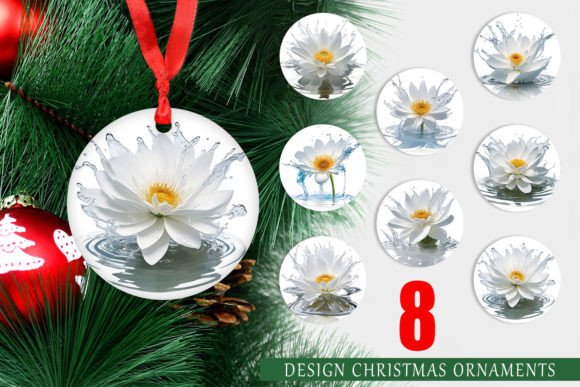
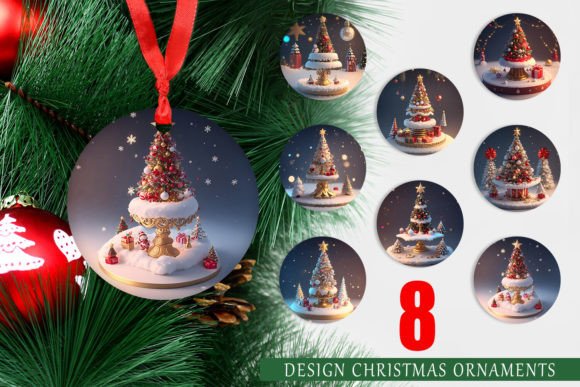
Integrating digital assets into physical holiday projects requires a bridge between screen-based design and tangible output. The Christmas Ornament 3D Tree Baubles collection serves as this critical link, providing a set of 8 circular decorative designs specifically engineered for print production. Unlike generic clip art, these files are structured as high-resolution production assets rather than mere visual references. For creators, educators, small business owners, and hobbyists, understanding the technical specifications and workflow applications of these 5x5 inch, 1500x1500 pixel PNG files is essential for achieving professional results. This asset pack fits into broader creative processes by offering pre-rendered 3D aesthetics that eliminate the need for complex modeling software while maintaining the visual depth required for premium-looking decorations.
Technical Specifications and Print Readiness
The foundation of any successful print project lies in asset resolution and color fidelity. These Christmas ornaments PNG files are configured at 300 DPI (dots per inch), which is the industry standard for high-quality commercial and home printing. At 1500x1500 pixels, each file provides sufficient data density to render crisp edges and smooth gradients when printed at the intended 5x5 inch size. This specific dimension is not arbitrary; it aligns with standard ornament blanks, circular cardstock cuts, and sublimation transfer sizes commonly used in seasonal crafting and merchandise production.
For professionals managing multiple projects, consistency across assets reduces friction during the assembly phase. Having a uniform set of 8 designs ensures that lighting, shadow direction, and stylistic rendering remain coherent across an entire tree or product line. This eliminates the disjointed look that often occurs when sourcing individual images from disparate origins. The PNG format further supports workflow efficiency by utilizing transparency channels. This allows for non-destructive editing, enabling users to place the 3D bauble designs onto colored backgrounds, textured papers, or composite layouts without needing to manually mask out white borders or deal with artifacting common in lower-quality JPEGs.
Pre-Production Planning and Asset Management
Before initiating the physical creation process, effective organization of these digital resources streamlines execution. Treat the Christmas Ornament 3D Tree Baubles set as a component library rather than a folder of loose images. When integrating these assets into a design ecosystem, consider naming conventions and metadata tagging if you use digital asset management software. Categorizing them by color palette, style, or intended application (e.g., "vintage gold," "modern red") allows for rapid retrieval during time-sensitive production windows.
During the planning phase, verify compatibility with your intended output method. If you are using sublimation printing, ensure your RIP software or printer driver is set to handle RGB-to-CMYK conversion accurately, as these PNGs are likely created in RGB color space for maximum vibrancy. For direct-to-garment or UV printing on ornament blanks, check that the 5x5 inch canvas size matches your jig or platen dimensions exactly. Pre-production also involves selecting the correct substrate. The 3D shading inherent in these designs interacts differently with matte versus glossy surfaces. Glossy finishes typically enhance the simulated depth and reflectivity of the 3D render, while matte paper may absorb some contrast, requiring slight curve adjustments in post-processing to maintain visual pop.
Execution Strategies for Physical Decoration
The primary application of this set is the creation of physical Christmas tree decorations, but the execution varies based on user intent and available equipment. For hobbyists and educators, the most accessible workflow involves printing on heavy cardstock or photo paper. After printing the 1500x1500 px designs at actual size, precision cutting is paramount. Using a circle punch or a digital cutting machine like a Cricut or Silhouette ensures the physical object matches the digital perfection of the file. Because the designs simulate spherical volume, centering the cut is critical; an off-center trim destroys the 3D illusion. Creating a simple alignment guide or registration mark in your layout software before printing can save significant material waste during this stage.
For entrepreneurs and makers producing sellable goods, these printable designs function as scalable inventory components. Sublimation onto ceramic, metal, or polymer ornament blanks transforms the digital file into a durable product. In this workflow, the Christmas Ornament 3D Tree Baubles act as the master artwork. Since the files are high-resolution, they can be mirrored and transferred without pixelation. The circular composition simplifies heat press placement, reducing the risk of uneven pressure or ghosting that often plagues irregularly shaped transfers. Furthermore, because you possess a set of 8 cohesive designs, you can offer bundled products or curated collections, increasing average order value through coordinated aesthetic themes.
Digital Integration and Hybrid Workflows
Beyond physical manufacturing, these assets hold significant utility in digital-first workflows. Marketers, bloggers, and content creators can utilize the Christmas ornaments PNG files to enhance seasonal campaigns without commissioning custom photography. The transparent background makes them ideal for overlaying on website headers, social media graphics, email newsletters, and digital planners. In this context, the 3D rendering provides a tactile quality to flat screens, increasing engagement through visual richness.
When using these assets digitally, resize proportionally to maintain aspect ratio. While the native 1500x1500 px size is optimized for print, web usage requires optimization to prevent page load bloat. Export web-specific versions at 72 DPI or use modern formats like WebP derived from the source PNG. For digital product creators, such as those selling printable planners or journaling kits, these baubles serve as modular embellishments. Their circular shape functions naturally as bullet points, date markers, or photo frames within digital stationery templates. The key to successful digital integration is respecting the original artistry; avoid over-filtering or distorting the image, as the pre-baked shadows and highlights are calculated to create the 3D effect.
Quality Control and Long-Term Asset Utility
Maintaining quality standards ensures that the Christmas Ornament 3D Tree Baubles remain a reliable resource across multiple seasons and projects. Implement a proofing protocol before mass production. Print a single test unit at full scale to evaluate color accuracy, sharpness, and finish interaction. Lighting conditions in your workspace affect perception; always inspect prints under neutral daylight-balanced bulbs to match how they will appear in typical home environments. If colors appear dull, adjust printer profiles or paper settings rather than altering the source file, preserving the integrity of the master asset.
Long-term utility depends on proper archival storage. Keep the original 300 DPI PNG files in a dedicated, backed-up directory separate from working copies. Never overwrite the master files with edited or resized versions. As display technologies and printing methods evolve, having access to the uncompressed, high-resolution source ensures future-proofing. You may eventually need to upscale for larger signage or downscale for miniature tags; starting with the highest quality baseline maximizes flexibility.
Consider documenting your specific workflows associated with these assets. Note which paper stocks yielded the best 3D effect, which color profiles worked for sublimation, or how the assets performed in specific digital layouts. This institutional knowledge transforms a simple purchase into a refined production system. Whether you are a freelancer delivering client work, a teacher creating classroom activities, or a parent making family heirlooms, treating these printable designs as professional-grade tools elevates the final outcome. The intersection of precise technical specs and thoughtful application is what distinguishes a polished result from a basic craft project.
Workflow Optimization Checklist
- Verify Dimensions: Confirm canvas size is set to 5x5 inches at 300 DPI before printing to prevent unintended scaling.
- Color Profile Check: Determine if your output device requires RGB or CMYK input and convert appropriately using soft-proofing tools.
- Substrate Matching: Select paper or blank materials that complement the simulated lighting and texture of the 3D render.
- Cutting Alignment: Use registration marks or digital cut lines centered precisely on the bauble design to preserve the spherical illusion.
- Master File Preservation: Maintain an unaltered archive of the original 8 PNG files separate from project-specific edits.
- Test Prototyping: Always produce a physical or digital proof to validate color, contrast, and scale before committing to full production runs.
By approaching the Christmas Ornament 3D Tree Baubles with a process-oriented mindset, users unlock the full potential of this digital asset pack. It transitions from a simple download to a versatile component in a larger creative infrastructure, supporting everything from personal tradition-building to commercial product development. The clarity of the 1500x1500 px resolution combined with the practicality of the 5x5 inch format creates a standardized unit of creative work that integrates smoothly into diverse holiday production schedules.