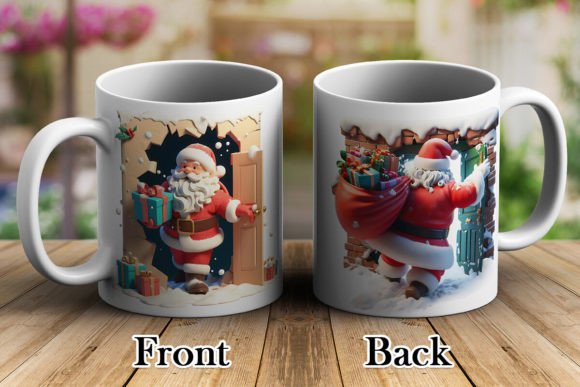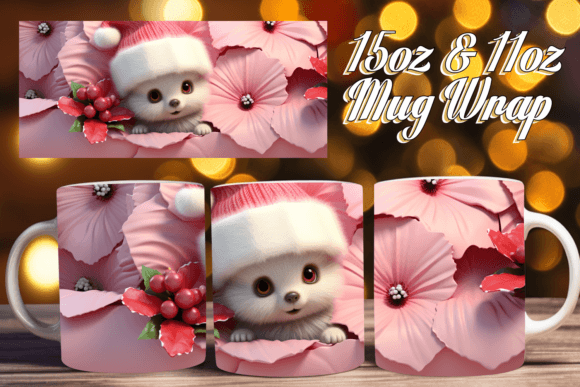
Mastering the Holly Jolly 3D Mug Wrap Christmas Design for Professional Sublimation Results
The holiday season represents one of the most significant revenue opportunities for sublimation businesses and a period of intense creative expression for hobbyists. Within this competitive landscape, the visual impact of your products often dictates their success. The Holly Jolly 3D Mug Wrap Christmas design serves as a prime example of how specialized digital assets can elevate standard drinkware into premium seasonal merchandise. However, acquiring a high-quality graphic is only the first step in a complex production chain. Achieving a flawless finish requires a comprehensive understanding of dye-sublimation physics, color management, and heat press mechanics. This guide explores the technical and practical dimensions of utilizing these specific 3D wrap files, ensuring that creators at every level can translate digital pixels into tangible, vibrant holiday products.
Technical Specifications and File Integrity
When working with seasonal graphics like the Holly Jolly 3D Mug Wrap Christmas collection, resolution is non-negotiable. These templates are engineered at 300 DPI (dots per inch), which is the industry standard for high-fidelity printing. Unlike web graphics that typically exist at 72 DPI, sublimation transfers require dense pixel information to prevent banding or blurring when wrapped around a curved ceramic surface. The included PNG files are optimized specifically for this purpose, offering transparency and color depth that maintains integrity during the thermal transfer process.
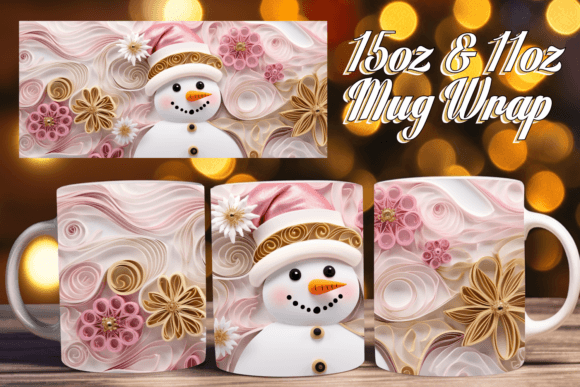
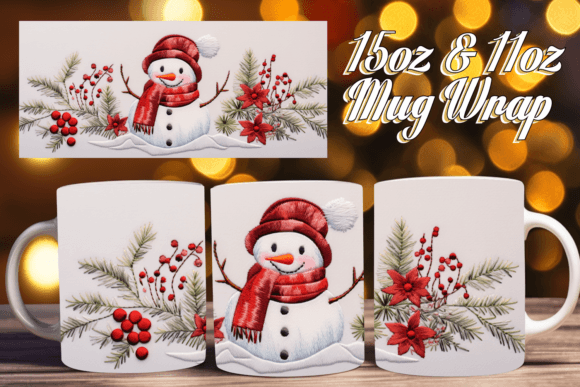
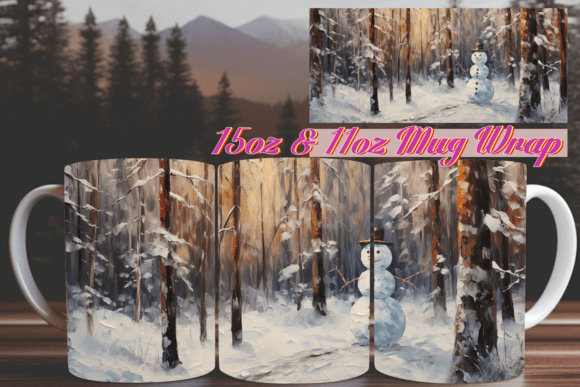
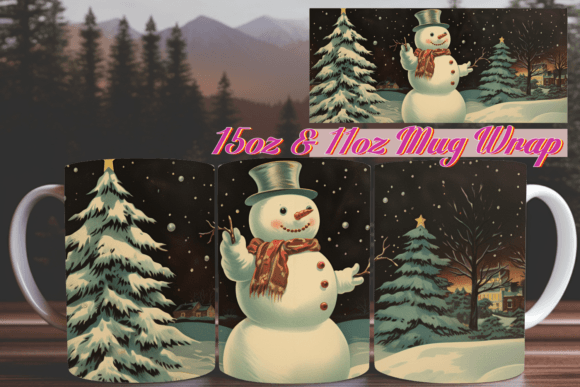
The provision of distinct files for both 11oz and 15oz mugs addresses a critical variable in mug manufacturing. While many designs attempt to be "one size fits all," professional results demand precision sizing. An 11oz wrap typically measures approximately 8.5 x 3.5 inches, while a 15oz wrap requires dimensions closer to 9 x 4 inches. Using the correctly sized file prevents white borders from appearing on larger mugs or awkward cropping on smaller ones. Furthermore, the 3D aspect of this design implies a visual depth or perspective that must align perfectly with the mug’s curvature; improper scaling destroys this illusion, making the technical accuracy of the source file paramount.
Prerequisites: Equipment and Software Proficiency
It is vital to establish a clear boundary regarding support and responsibility before integrating new digital assets into your workflow. To effectively utilize this file, it is essential to have a strong grasp of the concept of sublimation. The creator provides support exclusively for issues related to the digital files themselves, such as download errors or file corruption. Guidance on pressing times, temperatures, printer settings, or ink compatibility falls outside this scope. Therefore, prospective users must ensure they possess the necessary infrastructure and knowledge base prior to purchase.
This prerequisite extends beyond mere ownership of equipment. Operators should be proficient in raster graphics software capable of handling high-resolution PNGs without automatic compression. Understanding ICC profiles is equally important, as the vibrant reds and greens characteristic of a Holly Jolly 3D Mug Wrap Christmas design are notoriously difficult to reproduce accurately without proper color correction. If you are still experimenting with basic heat settings or learning how to manage color gamuts between monitor and print, it is advisable to solidify those foundational skills first. This ensures that any variables affecting the final product can be isolated to either the substrate/process or the digital asset, streamlining troubleshooting.
Essential Hardware Considerations
- Mug Press vs. Convection Oven: 3D wraps often perform best in convection ovens using silicone wraps or shrink film, as this applies even pressure across the entire circumference. Standard clamp presses may leave soft spots near the handle where the 3D effect is most vulnerable to distortion.
- Polymer Coating Quality: Not all sublimation blanks are created equal. The vibrancy of holiday colors depends heavily on the quality of the polyester coating on the ceramic. AA-grade coatings yield sharper details and brighter whites compared to economy grades.
- Paper Selection: High-release sublimation paper is recommended for full-coverage wraps to prevent ghosting. Since the Holly Jolly design likely features intricate patterns extending to the edges, paper stability during the heating cycle is crucial.
Visual Psychology and Seasonal Market Relevance
Beyond the technical execution, the choice of a "Holly Jolly" aesthetic taps into established consumer psychology. Holiday purchasing behavior is driven largely by nostalgia and tradition. Designs featuring classic motifs—holly berries, festive typography, and traditional color palettes—activate emotional responses that generic winter patterns cannot replicate. The 3D element adds a layer of modern novelty to this traditional appeal, bridging the gap between retro sentimentality and contemporary design trends.
For business owners and educators teaching merchandising, this intersection of style and technology offers a valuable case study. The 300 DPI resolution allows for close-up inspection without loss of detail, which is essential for retail environments where customers handle products before buying. In educational settings, analyzing how a flat 2D PNG creates a perceived 3D effect on a cylindrical object provides excellent lessons in anamorphic projection and spatial design. The versatility of the included files means they can serve as standalone products or as background layers for personalized family names, demonstrating the scalability of digital assets in small-batch manufacturing.
Optimizing the Production Workflow
Integrating the Holly Jolly 3D Mug Wrap Christmas files into a production line requires a systematic approach to maintain consistency. Because these are high-resolution PNG templates, they offer flexibility for customization while maintaining structural integrity. Users can overlay text, adjust hue/saturation to match specific brand guidelines, or combine elements with other vector graphics. However, any modification must respect the original safe zones and bleed areas established in the template.
Color management deserves special attention during the workflow setup. Monitors emit light (RGB), while sublimation ink reflects light (CMYK). The vivid greens and reds in holiday designs often fall outside the printable CMYK gamut. Utilizing the correct ICC profile for your specific printer and ink combination is the only way to approximate the screen preview. Test prints on plain paper can verify alignment and sizing, but only actual sublimation tests reveal true color output. Documenting successful time, temperature, and pressure settings for this specific design creates a repeatable standard operating procedure, reducing waste during peak holiday production periods.
Troubleshooting Common Application Issues
- Ghosting or Blurring: Often caused by movement during the transfer process. With full-wrap 3D designs, securing the paper tightly with heat-resistant tape or using properly sized shrink sleeves is mandatory. Ensure the mug is stationary throughout the cooling phase.
- Color Muting: If the holly leaves appear brownish or the reds look dull, check your temperature and dwell time. Insufficient heat prevents complete gas conversion, while excessive heat can scorch the polymer coating. Verify that your heat source is calibrated with an infrared thermometer.
- Seam Lines: Visible vertical lines indicate uneven pressure or paper overlap issues. For 3D wraps, butt-joining the paper edges precisely is superior to overlapping. Silicone wrap tension should be uniform; loose areas result in faded seams.
- Pixelation: If the image appears blocky despite being 300 DPI, the file may have been inadvertently resized or compressed during editing. Always work with the original PNG and export at maximum quality settings.
Ethical Usage and Intellectual Property Awareness
Utilizing commercial-use digital assets carries implicit responsibilities. The license for the Holly Jolly 3D Mug Wrap Christmas files typically permits the creation of physical end-products for sale but prohibits the redistribution of the digital files themselves. Respecting these terms protects the designer’s livelihood and sustains the ecosystem of affordable, high-quality resources for the community. Additionally, avoiding trademarked characters or phrases within your customizations prevents legal complications. While the provided template is cleared for use, any additions you make must also be commercially viable.
Support channels play a specific role in this ecosystem. As noted, assistance is available for file-specific concerns. If a download is corrupted or a file fails to open, reaching out is appropriate and encouraged. However, leveraging this channel for general sublimation advice diverts resources from legitimate technical support needs. Building a separate network of peers, forums, and manufacturer documentation for process-related questions ensures you receive expert guidance tailored to your specific equipment while respecting the designer’s stated boundaries. This professional courtesy fosters a healthier marketplace for digital creators and more self-sufficient practitioners.
Expanding Creative Applications Beyond Standard Mugs
While sized for 11oz and 15oz mugs, the high-resolution nature of these PNG templates invites exploration of adjacent substrates. The same design principles apply to tumblers, travel mugs, and even flat items like ornaments or coasters, provided the user adjusts the canvas size appropriately. Educators and workshop leaders can use these files to demonstrate adaptation techniques, showing students how to reconfigure a mug wrap into a seamless pattern for different form factors. This maximizes the return on investment for the digital asset and encourages creative problem-solving.
Ultimately, the value of the Holly Jolly 3D Mug Wrap Christmas collection lies in its balance of festive appeal and technical rigor. It serves as both a product and a benchmark for quality. By approaching these files with professional preparation, respecting technical prerequisites, and understanding the broader context of seasonal merchandising, users can achieve results that satisfy both commercial demands and personal creative standards. The transition from digital file to finished heirloom is a testament to the operator’s skill, supported by the precision of well-crafted design resources.