Evaluating the 3D Snowflake Paper Cut Christmas Toy for Professional Crafting
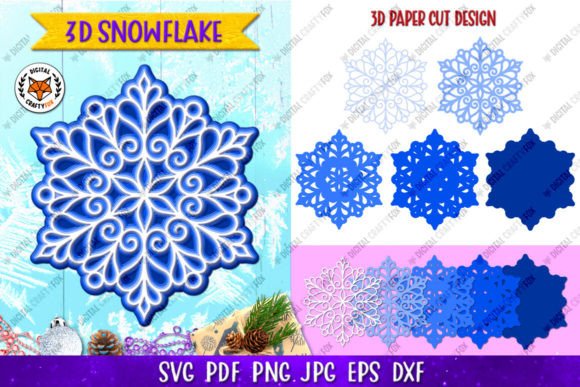
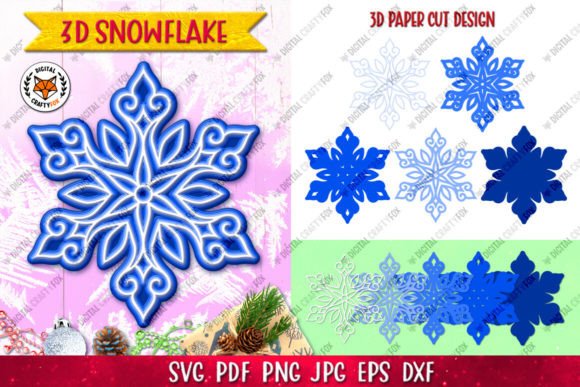
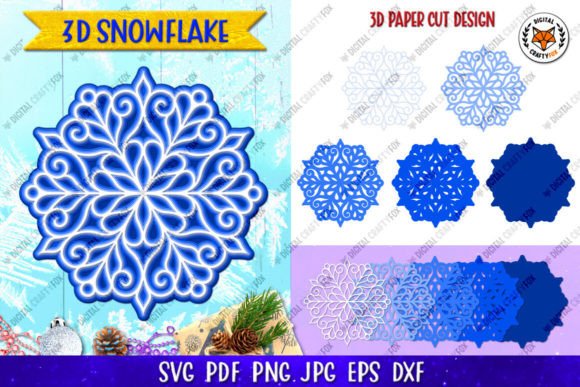
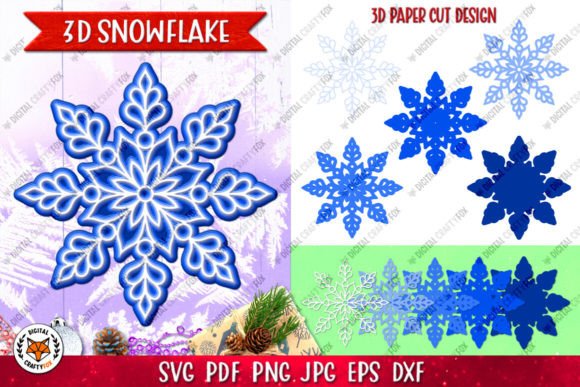
The intersection of digital fabrication and traditional holiday aesthetics has created a significant market for precision-cut decor. Among these assets, the 3D Snowflake Paper Cut designed as a Christmas Toy or ornament represents a specific category of digital product that demands technical scrutiny. This asset is not merely a decorative image; it is a functional manufacturing file set intended for layering. Comprising five distinct layers, this design transforms flat media into a dimensional object through stacking and alignment. For professionals in the maker space, small business owners producing seasonal inventory, or educators managing classroom projects, understanding the technical specifications and practical application of this 5-layer system is essential before integrating it into a production workflow.
Technical File Specifications and Workflow Integration
The viability of any digital cutting file depends entirely on its compatibility with existing hardware and software ecosystems. This archive provides a comprehensive suite of formats that addresses the fragmented nature of the current maker market. The inclusion of DXF and SVG files ensures immediate compatibility with vector-based cutting software such as Silhouette Studio, Cricut Design Space, and Adobe Illustrator. These vector formats are critical for laser cutting users who require precise node paths rather than rasterized images. The SVG format, in particular, maintains scalability without resolution loss, allowing the snowflake to be resized for different applications—from miniature tree ornaments to large-scale window displays—without compromising edge quality.
For users focused on print-then-cut workflows or sublimation transfers, the raster options provide necessary flexibility. The JPG and PNG files at 3600x3600 pixels (300 DPI) meet professional printing standards. The transparent background on the PNG variant is especially valuable for sublimation designers who need to composite the snowflake onto dark textiles or colored mugs without manual masking. Additionally, the EPS10 file (864x864 pixels) serves as a bridge for legacy design software and commercial print environments. While the pixel dimension of the EPS is lower than the JPG/PNG counterparts, it remains sufficient for standard ornament sizing and vector editing within CorelDRAW or older Adobe versions.
A notable inclusion for mixed-media workshops is the dedicated hand-cutting PDF. At 300 DPI on a transparent background, this file acknowledges that not all end-users possess digital cutting equipment. For educators or community center organizers, this allows for hybrid projects where some participants use automated cutters while others engage in manual scissor work, maintaining visual consistency across the group.
Structural Integrity of the 5-Layer Design
The defining characteristic of this 3D Snowflake Paper Cut is its five-layer architecture. In dimensional paper engineering, the number of layers directly correlates to perceived depth and structural rigidity. A three-layer design often appears flat, while seven or more layers can become cumbersome and difficult to align. Five layers represent a functional sweet spot for Christmas toys and ornaments.
From a manufacturing perspective, this layer count offers specific advantages:
- Adhesive Management: Five layers allow for sufficient surface area for glue or foam tape without creating excessive bulk that causes warping.
- Shadow Depth: When backlit or placed near tree lights, five layers create enough internal shadowing to produce a genuine 3D effect without blocking light transmission entirely.
- Assembly Time: For small business owners fulfilling bulk orders, five layers strike a balance between premium appearance and labor efficiency. Assembly time per unit remains low enough to maintain healthy profit margins.
- Material Versatility: This depth works equally well with lightweight cardstock (65-80 lb) and heavier chipboard, whereas deeper stacks might fail with thinner papers.
Professionals should note that successful execution requires consistent spacing. The design presumably includes registration marks or alignment guides within the DXF/SVG files. Verifying these guides during the test cut phase is mandatory to prevent cumulative alignment errors that distort the final geometric symmetry.
Applications in Sublimation and Mixed Media
Beyond traditional paper cutting, the high-resolution raster files extend the utility of this 3D Snowflake into the sublimation market. The 3600x3600 pixel dimensions at 300 DPI translate to a physical print size of 12x12 inches at full quality. This resolution headroom allows creators to downscale for smaller blanks like coasters or keychains while retaining crisp edges, or to maintain full size for slate tiles and metal panels.
However, users must understand the distinction between the layered paper version and the sublimation application. Sublimation produces a flat, photographic representation of depth rather than physical dimension. To maximize value, marketers and creators should position these as complementary products: physical 3D ornaments for traditionalists and sublimated versions for customers seeking durable, shatterproof alternatives. The RGB color profile included in the files is optimized for screen display and sublimation ink conversion, but professionals must account for the inherent color shift that occurs during the heat transfer process. Always run test prints on your specific substrate, as RGB-to-CMYK conversion varies significantly between printer manufacturers and ink formulations.
Practical Considerations for Commercial and Educational Use
When evaluating this asset for commercial production or educational programming, several operational factors warrant attention. The digital download model eliminates shipping delays, enabling just-in-time production—a critical advantage during the compressed holiday season. However, the reliance on digital files places quality control responsibility squarely on the user.
Color Accuracy and Monitor Calibration: The product documentation correctly notes that colors may differ between screen and output. This is not merely a disclaimer; it is a fundamental reality of digital color management. Professionals using this asset for client work or retail sales should implement a color-managed workflow. Calibrate monitors regularly and create ICC profiles for specific paper/printer combinations. For hand-cutting PDFs intended for classroom use, consider printing on pre-colored cardstock rather than relying on ink-heavy CMYK coverage, which can warp paper and increase material costs.
Material Selection: The 5-layer design performs best with matte-finish papers. Glossy surfaces can reflect light in ways that flatten the perceived depth and reveal adhesive marks. For laser cutting users, avoid coated papers that may release toxic fumes; uncoated cardstock or basswood veneer yields cleaner results and safer operation. Test cut settings on scrap material first, as intricate snowflake geometry requires sharp blades and appropriate speed/force ratios to prevent tearing at fine points.
Licensing and Attribution: While not explicitly detailed in the provided specifications, professionals must verify licensing terms before selling finished products. Most digital cut files permit sale of physical derivatives but prohibit redistribution of the digital files themselves. Clarifying this upfront prevents legal complications and protects both creator and consumer.
Assessing Value and Long-Term Utility
The true measure of this 3D Snowflake Paper Cut lies in its adaptability beyond a single holiday season. Geometric snowflake designs possess timeless appeal that transcends trend cycles. Unlike character-based or year-specific ornaments, this asset can remain in active rotation indefinitely, amortizing the initial investment over multiple years. For educators, the layered structure teaches spatial reasoning, fine motor skills, and following sequential instructions—competencies that align with STEM and arts integration curricula.
For entrepreneurs, the multi-format delivery reduces friction across diverse customer segments. Offering both machine-cut and hand-cut versions expands addressable market without additional design labor. The transparent PNG files further extend utility into digital marketing materials, social media graphics, and website headers, providing cohesive branding across physical and digital touchpoints.
Ultimately, this asset succeeds when treated as a production component rather than a finished product. Its value emerges through thoughtful material selection, precise assembly, and strategic positioning within a broader product ecosystem. Professionals who approach it with technical rigor and creative adaptation will extract maximum return, while those expecting plug-and-play perfection without calibration may encounter the inevitable gaps between digital preview and physical reality. The comprehensive file package provides the foundation; execution determines the outcome.