3D Snowflake Ornament SVG: Layered Design Guide
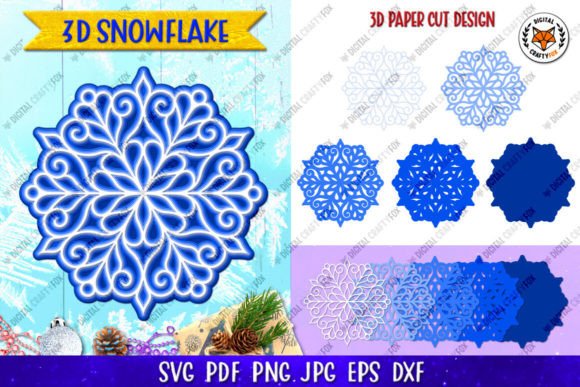
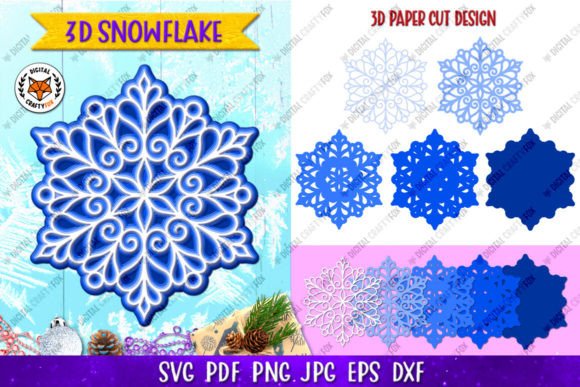
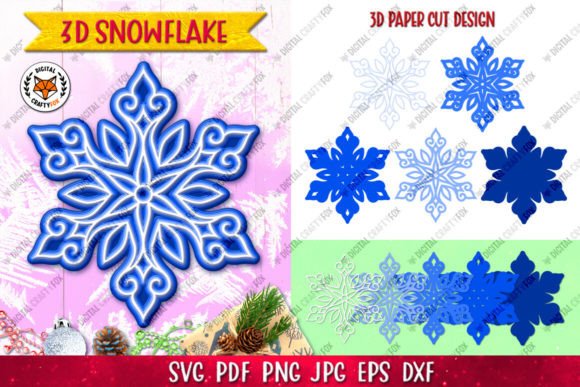
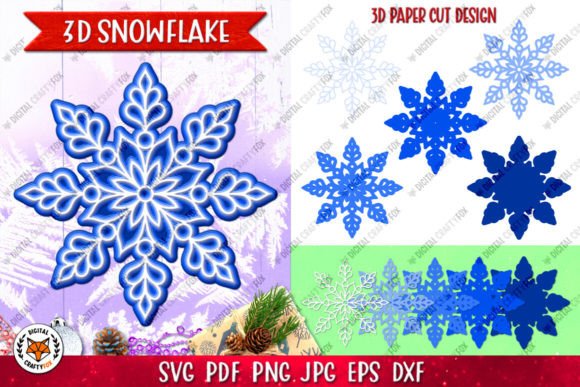
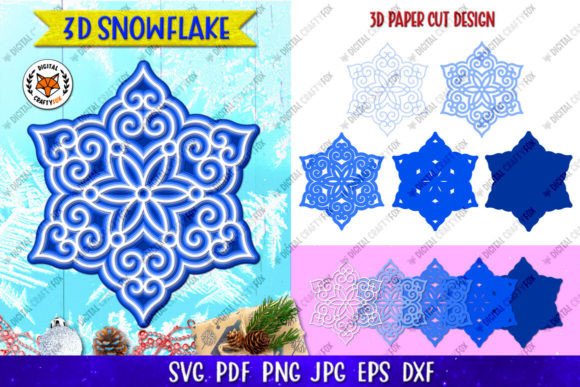
Creating depth in digital fabrication requires more than just a flat vector; it demands an understanding of spatial relationships and material thickness. The 3D Snowflake Ornament SVG serves as a prime example of how layered design assets can transform simple cardstock or acrylic into intricate, dimensional art. Unlike standard flat snowflake vectors, this specific design utilizes five distinct layers to build volume and shadow, creating a visual personality that feels both nostalgic and architecturally precise. For designers and crafters working with laser cutters, Cricut machines, or sublimation printers, understanding the anatomy of this 3D layered Christmas ornament is essential for achieving professional results that stand out in a saturated holiday market.
The Visual Architecture of Layered Vector Art
When evaluating design assets for editorial design, packaging design, or personal crafting, the distinction between a flat graphic and a 3D model lies in the intentionality of the line work. This 3D Snowflake Ornament SVG is engineered specifically for assembly. Each of the five layers plays a structural role, contributing to the overall silhouette while allowing light to pass through the negative spaces. This interplay of positive and negative space creates natural shadows when physical materials are stacked, eliminating the need for artificial shading in the file itself. The style balances geometric precision with organic fluidity, making it versatile enough for modern minimalist branding or traditional holiday decor.
For content creators and small business owners, this type of asset offers significant value beyond the immediate project. It demonstrates how complex forms can be broken down into manufacturable components. Whether you are producing physical ornaments for sale or creating digital mockups for social media graphics, the clean lines and optimized nodes of this SVG ensure that the final output remains crisp at any scale. The visual hierarchy is established through the stacking order, guiding the viewer’s eye from the outermost delicate filigree to the solid core, a principle that mirrors effective typography and logo design where focal points must be clearly defined.
Material Versatility and Technical Specifications
A premium design asset must be adaptable across various mediums and production methods. This digital download package addresses the diverse needs of modern makers by providing a comprehensive suite of file formats. Understanding which file to use is critical for maintaining quality and reducing production errors. The included DXF file is optimized for cutting software like Silhouette Studio, ensuring smooth blade paths without jagged edges. For users of Adobe Illustrator or CorelDRAW, the EPS10 and SVG files offer fully editable vectors that can be resized infinitely without loss of fidelity, which is vital for large-format signage or detailed jewelry-scale projects.
Sublimation and print-based applications require different considerations than cutting projects. The high-resolution JPG and PNG files, provided at 3600x3600 pixels and 300 DPI, ensure that printed colors remain vibrant and edges stay sharp. The transparent background on the PNG version allows for seamless integration into composite designs, such as custom apparel or mug wraps, without the need for tedious masking. Additionally, the inclusion of hand-cutting templates acknowledges the tactile nature of traditional paper crafts, bridging the gap between digital fabrication and artisanal techniques. This versatility makes the 3D Snowflake SVG a robust tool for entrepreneurs who operate across multiple product lines.
- DXF File: Best for entry-level cutting machines and CAD software compatibility.
- SVG File: Ideal for Cricut Design Space and scalable web graphics.
- EPS10 File: Standard for professional vector editing and commercial printing.
- PDF File: High-quality 300 DPI format for direct printing and pattern reference.
- PNG/JPG Files: Rasterized 3600px assets for sublimation and digital mockups.
Color Management and Production Realities
One of the most common challenges in translating digital designs to physical products is color accuracy. While the 3D Snowflake Ornament SVG provides a perfect digital blueprint, real-world variables affect the final aesthetic. Designers must understand that RGB values displayed on a calibrated monitor will differ from CMYK ink output or the specific dye lots of cardstock. When using the sublimation files, always perform test prints on your specific substrate, as polyester coatings and fabric weaves absorb ink differently. For laser cutting, the "color" is often the material itself—wood grain, acrylic transparency, or metallic sheen—which adds a layer of texture that no screen can replicate.
This discrepancy extends to sizing and fit. Although the files are precisely dimensioned at 864x864 pixels for raster versions, physical assembly depends heavily on material thickness. A 5-layer stack designed for 65lb cardstock may become too bulky if constructed from heavy chipboard, or too fragile if made from tissue paper. Professional makers treat these digital files as a starting point rather than a rigid rule. Testing one prototype before mass production is not just a suggestion; it is a necessary step in quality control. This practical approach ensures that the intricate alignment tabs and slots function as intended, preserving the structural integrity of the 3D layered Christmas ornament.
Integrating Dimensional Assets into Brand Identity
For marketers and brand strategists, seasonal assets like this snowflake SVG serve as touchpoints for audience engagement. However, successful integration requires consistency with existing brand identity. If your visual language relies on modern typography and sans serif fonts, choose materials and colors that reflect that cleanliness—perhaps white acrylic or matte black cardstock. Conversely, if your brand leans toward heritage or artisanal vibes, textured papers and warm wood tones will reinforce that narrative. The 3D nature of the ornament allows it to function as a prop in product photography, adding foreground interest and bokeh effects that elevate flat lay compositions.
Beyond aesthetics, consider the functional application of these files in commercial contexts. Small business owners can use the layered design to create tiered pricing structures, offering simple single-layer versions as budget options and full 5-layer assemblies as premium products. Content creators can document the assembly process, turning the construction of the ornament into engaging video content that highlights craftsmanship and attention to detail. This transforms a static digital file into a dynamic storytelling element. Always verify licensing terms for commercial use to ensure compliance, and remember that unique modifications to the base design can help differentiate your offerings in a marketplace filled with identical downloads.
Best Practices for Digital Asset Utilization
Maximizing the value of this 3D Snowflake Ornament SVG involves more than just downloading and cutting. Organization is key. Maintain a structured file system that separates source vectors from production-ready exports. Label layers clearly within your design software to streamline the assembly process, especially when managing multiple color variations or material types. For those new to layered paper art, start with lighter weight papers to practice alignment before moving to thicker stocks. Use adhesive sparingly to prevent warping, and consider using foam tape between certain layers to enhance the 3D effect beyond what the flat file dictates.
Finally, engage with the creator community. If questions arise regarding file compatibility or assembly techniques, reaching out directly often yields faster solutions than troubleshooting alone. Feedback loops are essential for improving both your skills and the assets themselves. If this 3D layered Christmas ornament enhances your workflow or product line, leaving a review helps other designers make informed decisions and supports the continued development of high-quality fabrication files. By approaching digital downloads with technical mindfulness and creative curiosity, you transform simple vectors into tangible expressions of design excellence.